


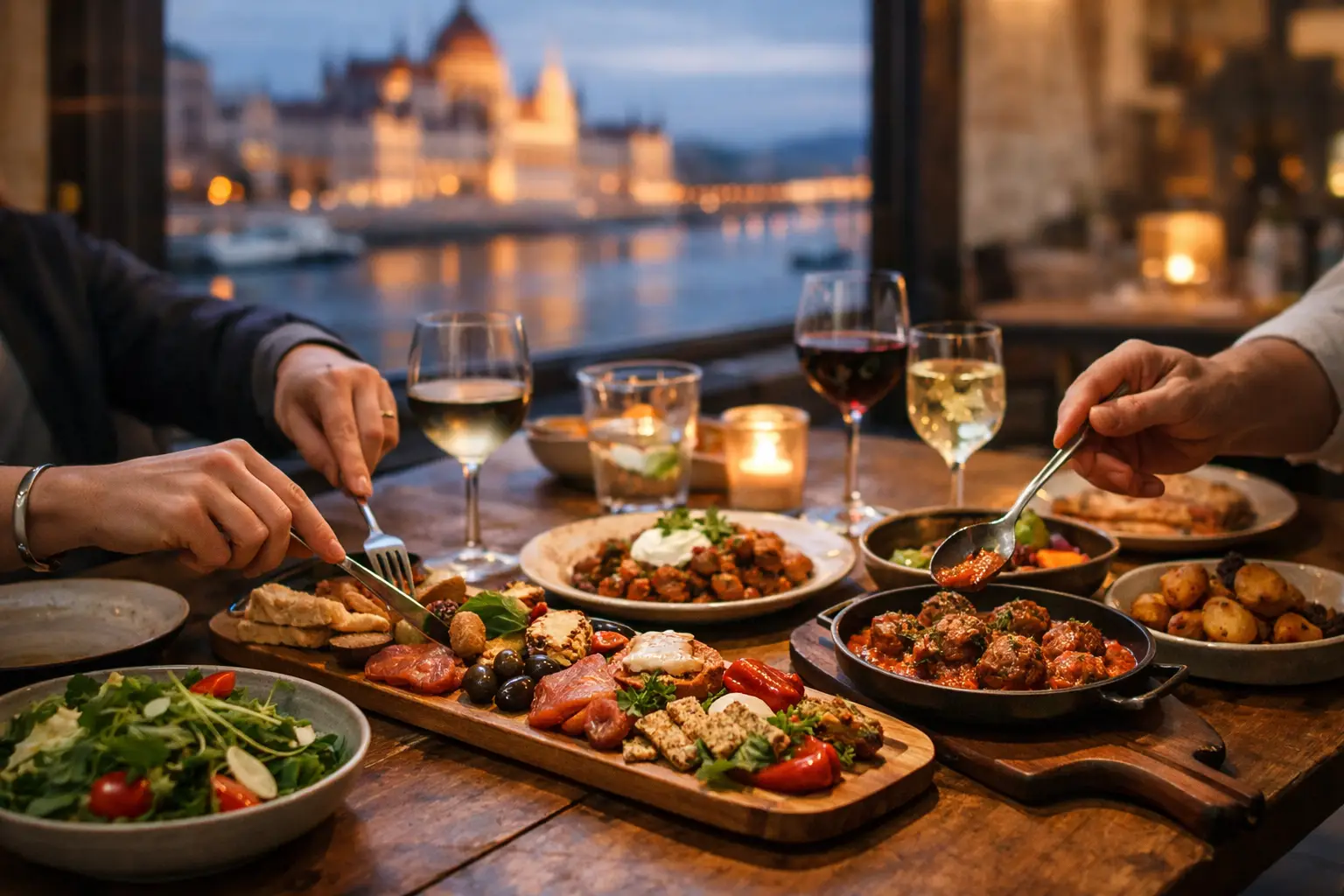
A great night out in Budapest rarely begins with everyone ordering their own safe, predictable plate. It starts when the table leans in, someone says, “Let’s get a few things for everyone,” and the meal becomes a conversation. That is the real appeal of a shared dining restaurant Budapest guests actually return to - not just variety on the table, but the feeling that dinner is happening together.
In a city full of beautiful dining rooms and ambitious kitchens, shared dining stands out because it changes the pace of the evening. You taste more. You talk more. You linger longer. For couples, it feels more intimate. For friends, it is naturally social. For business dinners, it softens the formal edges and gives people something to connect over beyond work.
What makes a shared dining restaurant in Budapest work
Shared dining can be done badly. Plenty of places use the language of tapas or small plates when what they really mean is tiny portions, rushed service, or a menu that looks exciting but never quite lands. The best shared dining restaurant Budapest has to offer gets a few fundamentals right.
First, the food has to reward curiosity. If guests are meant to order across the menu, each dish needs its own personality. A bright, citrusy plate should sit comfortably next to something smoky and slow-cooked. A crisp, fresh bite should make sense before a richer one. The table should feel like movement, not repetition.
Second, pacing matters more than many restaurants realize. Shared dining should feel generous, not chaotic. Dishes arriving in a thoughtful rhythm let people settle into the experience. Too much all at once and half the table goes cold. Too little too slowly and the mood slips. Good service reads the room.
Third, the room itself matters. Shared food asks people to reach, offer, pass, and react. That only works when the atmosphere is warm enough to encourage it. The best places understand that hospitality is not decoration. It is how a space makes people behave. If the table invites conversation, the meal already has a head start.
Why Budapest suits shared dining so well
Budapest has always been a city that rewards long evenings. People do not come here only to eat and leave. They come for the rhythm of a night that stretches. A glass of wine becomes another bottle. A quick dinner turns into one more round, one more plate, one more story. Shared dining fits that rhythm perfectly.
There is also something about Budapest’s international energy that makes this style of eating feel natural. Locals, expats, and travelers meet here with different habits, tastes, and expectations. A shared table bridges that beautifully. Nobody has to commit to just one cuisine or one idea of dinner. The table becomes a small journey, with each dish adding a new accent.
That matters even more for guests who care deeply about food quality and atmosphere. If you are choosing a restaurant for a date, a reunion, or a special evening during a city break, you are not looking only for calories. You want discovery. You want a sense of place, but not a tired version of it. Shared dining gives chefs more room to tell a bigger story.
The best shared dining restaurant Budapest diners look for now
Today’s guests are more selective than they were a few years ago. Beautiful interiors are no longer enough. A clever menu name is not enough either. People want the full experience to feel real.
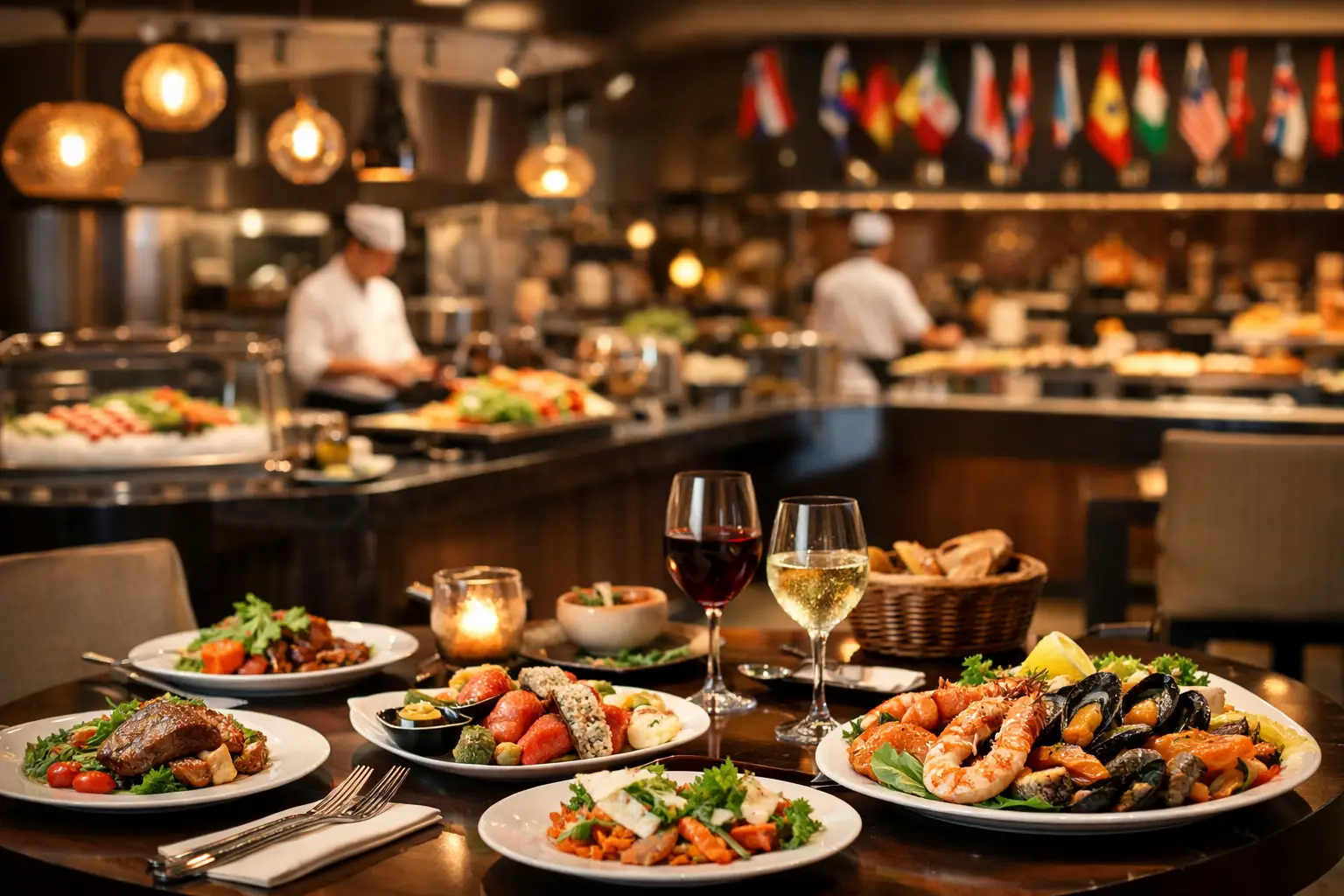
That means ingredient quality has to be obvious from the first bite. Seasoning has to be confident. The drinks list should feel considered rather than assembled. And the concept should hold together. If a restaurant serves Spanish-style sharing, Mediterranean influence, or global small plates, guests can tell whether that idea comes from lived experience or from trend-chasing.
There is also a growing expectation around dietary trust, and this is where many restaurants still fall short. Shared dining is supposed to make everyone at the table feel included. But for people with celiac disease or gluten intolerance, that experience can quickly become stressful. A menu with a few labeled items may sound reassuring, yet in many kitchens the real risk lies in preparation, not wording.
This is one of those moments where “it depends” matters. If your group has no dietary restrictions, you may focus on flavor, service, and atmosphere first. If one guest needs absolute gluten-free safety, the definition of a great night changes. Suddenly the best restaurant is not the one with the longest menu. It is the one where trust is built into every surface, process, and plate.
Shared dining restaurant Budapest experiences and gluten-free confidence
For gluten-free diners, shared dining can be both joyful and complicated. Joyful because this style of eating is naturally abundant and social. Complicated because shared plates increase the chance of mix-ups, crumbs, and cross-contact when the kitchen is not fully committed.
That is why a fully gluten-free kitchen changes the entire experience. It lets the table relax. Nobody has to pause before every bite, negotiate around bread baskets, or wonder whether the fryer is actually safe. The meal returns to what it should have been all along - generous, spontaneous, and shared.
In Budapest, that level of confidence is still rare enough to matter. It turns a restaurant from a convenient option into a destination. It also creates something even more valuable than satisfaction: relief. For many guests, especially travelers who spend half their trip researching where they can safely eat, relief is unforgettable.
At Saboré, that commitment came from family life, not branding. After their daughter was diagnosed with celiac disease, the founders rebuilt the kitchen as fully gluten-free, without exceptions and without compromise. That changes the feeling of the table. Guests can order widely, share freely, and focus on flavors shaped by journeys across Morocco, the Mediterranean, Europe, Asia, and Latin America rather than on risk management.
How to choose the right place for your group
If you are picking a shared-table spot in Budapest, the smartest question is not simply “Is the food good?” It is “What kind of evening do we want?” Shared dining can serve very different moods.
For a date, look for restraint as much as excitement. You want enough variety to keep the meal playful, but not a menu so sprawling that it feels unfocused. Lighting, pacing, and wine matter here. A memorable date-night table lets the food support the connection rather than compete with it.
For a group of friends, range matters more. Different textures, temperatures, and flavor profiles keep everyone engaged. This is where kitchens with a clear point of view do best. A meal built around global influences can be fantastic, but only when it still feels edited and intentional.
For business dinners, shared dining works best when service is polished and intuitive. People need to feel taken care of without constant interruption. The right place gives the table enough energy to feel alive, while still leaving room for actual conversation.
And if anyone in your group is gluten-free for medical reasons, ask the more uncomfortable question early: is the kitchen fully gluten-free, or are there just a few dishes marked on the menu? The difference is enormous. One offers options. The other offers peace of mind.
Why shared meals are often the most memorable ones
People remember specific dishes, of course. A perfect sauce, a smoky bite, a dessert that arrives at exactly the right moment. But more often, they remember the exchange around the plate. Who insisted everyone try the last bite. Who changed their mind after tasting something unexpected. Who ordered the dish nobody understood and ended up being right.
That is the deeper reason shared dining keeps growing in appeal. It turns dinner into participation. The meal is not presented as a finished performance for each individual guest. It is built at the table, in real time, by appetite, generosity, and curiosity.
In a city as layered and sociable as Budapest, that feels exactly right. The most satisfying restaurant experiences here are rarely the most rigid ones. They are the evenings that open up slowly, with excellent food, good wine, and enough trust at the table for everyone to reach for one more plate.
If you are searching for a shared dining restaurant Budapest travelers and locals can both fall for, choose the place that gives you more than choice. Choose the one that makes everyone at the table feel included, relaxed, and glad they came hungry.