


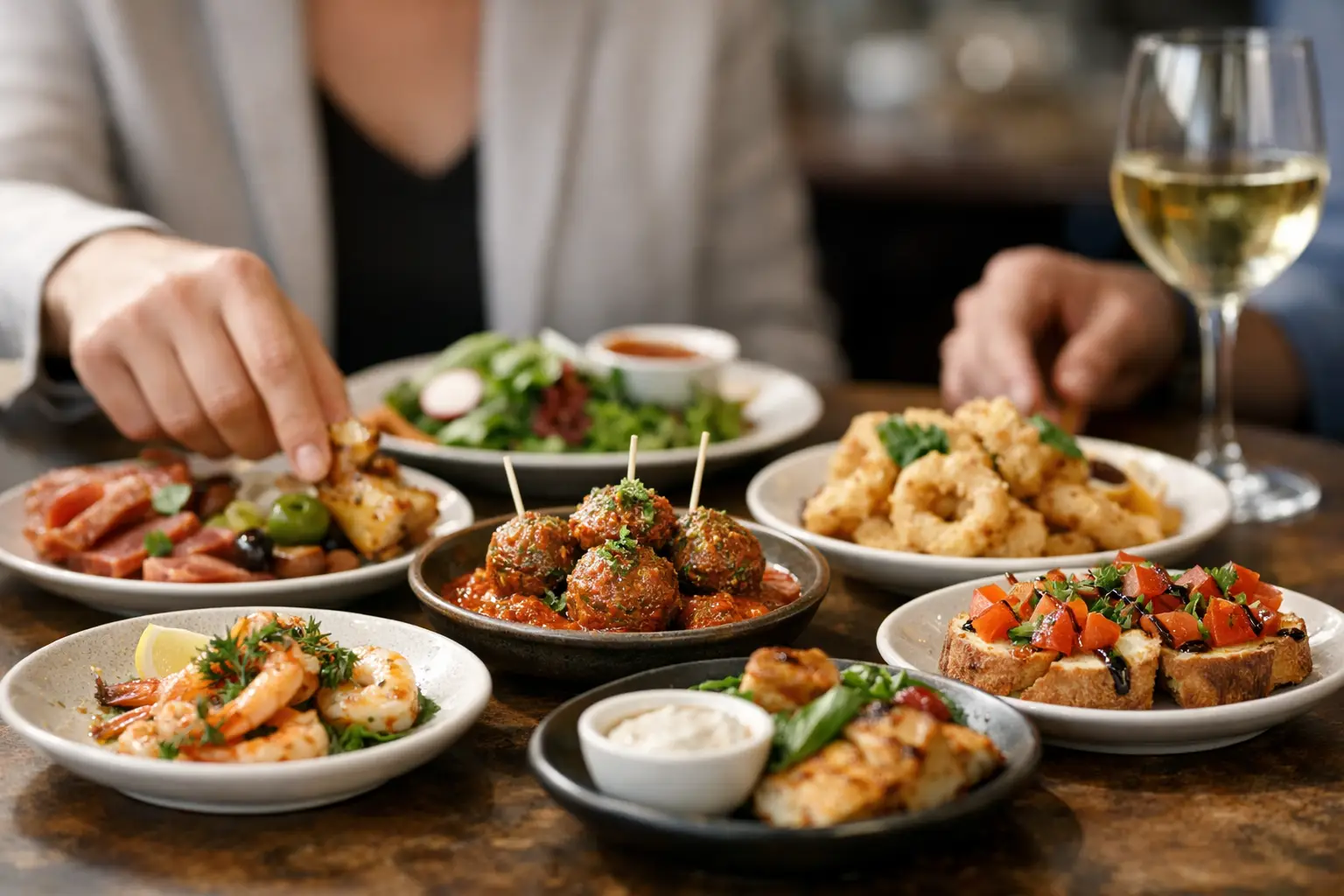
The table looks better when it arrives in waves. A few dishes first, a little anticipation, a glass in hand, and that quiet moment when everyone leans in to taste. That is the pleasure at the heart of how to order small plates - not treating dinner like a checklist, but letting it unfold like a conversation.
Small plates can be the most generous way to eat and the easiest way to order badly. Too much at once, and the table turns crowded and frantic. Too little, and someone is still hungry after the last bite of roasted eggplant or seared seafood. The sweet spot is not about strict rules. It is about rhythm, balance, and knowing what kind of meal you want to have.
How to Order Small Plates Starts With the Table
Before you think about the menu, think about the people. Ordering for two feels different from ordering for six, and a date night has a different tempo than a birthday dinner with friends. The right number of plates depends less on math than on appetite, mood, and whether the table wants a light graze or a full evening of sharing.
For two people, three to five plates is often a good place to begin. That usually gives you enough range to taste different textures and flavors without turning the meal into a race. If you are very hungry, adding one more dish later is almost always better than ordering everything up front.
For four people, five to seven plates tends to create that ideal shared-table energy. Everyone gets a few bites of each dish, but the table still feels intentional rather than overloaded. In larger groups, it helps to order in rounds. A first round gets the meal moving. A second round responds to what people loved most.
This matters because small plates are not meant to land with the weight of a three-course fixed menu. They are more fluid than that. The best shared meals leave room to react.
Order With Contrast, Not Just Cravings
One of the most common mistakes people make is ordering five versions of the same feeling. It happens easily. A table full of fried dishes sounds fun until every plate arrives golden, crisp, and heavy. The same goes for creamy dishes, rich meats, or too many acidic bites competing with one another.
A better approach is to build contrast into the meal. Think warm and cool, crisp and soft, bright and deep. If you start with something fresh, like a citrusy salad or a herb-driven vegetable plate, you create space for a richer dish after it. If you have a slow-cooked or smoky plate on the table, pair it with something sharper or cleaner to keep the meal lively.
This is where small plates feel almost musical. You want variation in tempo. A creamy dip, a charred vegetable, a seafood dish with lift, a meat plate with spice, then maybe something comforting to anchor it all. Each dish should make the next one more interesting.
That does not mean every table needs perfect balance. Sometimes you simply want comfort and abundance. But if you are wondering how to order small plates in a way that feels thoughtful rather than chaotic, contrast is the answer.
Think in categories
An easy way to organize your order is to choose across a few broad types of dishes. One or two vegetables, one seafood option if the table enjoys it, one meat dish, and one starch or more substantial plate often creates a natural spread. If there is a house specialty, include it. Menus usually reveal where the kitchen wants to be judged.
This approach works especially well when the menu travels across different culinary influences. At a place where Spanish sharing culture meets flavors from Morocco, the Mediterranean, Asia, and Latin kitchens, variety is part of the pleasure. The goal is not to stay within one lane. It is to let the meal move.
Pace Matters More Than People Expect
Many guests assume the smartest move is to order everything at once. Sometimes that works, especially for a quick lunch or a group that wants the full spread immediately. But for dinner, pacing often makes the experience better.
Start with enough food to settle the table, not finish the evening. Two or three dishes for a smaller party, or a modest first round for a larger group, gives you time to read the appetite of the room. Maybe everyone wants another vegetable and a second bottle of wine. Maybe the table unexpectedly falls in love with one dish and wants to repeat it. Maybe you realize halfway through that one more substantial plate would make the meal feel complete.
The beauty of small plates is flexibility. You do not have to solve the entire evening in the first two minutes.
Pacing is especially useful if you are dining with people who have different hunger levels. One person may want a full dinner. Another may prefer a lighter meal with drinks. Ordering in rounds protects both experiences.
Ask One Good Question
You do not need to interview the server, but one thoughtful question can change the meal. Ask what they would order for your group size, or which dishes create the best balance together. Not which dish is most popular. Popularity is not the same as harmony.
Good hospitality is part intuition, part listening. If you say you want something celebratory, light, spicy, vegetable-forward, or satisfying enough to replace a traditional entree, the team can guide you much better than if you simply point at whatever sounds familiar.
For guests with celiac disease or gluten intolerance, this question carries even more weight. Dining should feel relaxed, not tactical. In a fully gluten-free kitchen, that ease changes the whole mood of the table. You can focus on flavor and flow rather than risk management, which is exactly how it should be.
Do Not Ignore Portion Reality
Not all small plates are equally small. Some are closer to a composed appetizer. Others eat like a half entree. That is why rigid formulas can fail.
A plate of marinated olives or blistered peppers adds flavor but not much heft. A rich rice dish, braised meat, or generous seafood plate can shift the whole meal. When you order, try to notice which dishes are there to spark appetite and which ones are there to satisfy it.
If the menu descriptions are elegant but vague, ask. A quick question about size is never unsophisticated. It is practical.
When more is not better
There is a particular kind of overordering that happens in beautiful restaurants. Everything sounds irresistible, and suddenly the table is buried under abundance. It can feel festive for a moment, then slightly wasteful. The later dishes get less attention. The textures fade. The meal loses shape.
Restraint is part of good ordering. Leave room for a last savory plate if needed, or dessert if the night asks for it. A shared meal should feel generous, not exhausting.
Drinks Should Support the Food
If you are sharing plates, the drinks should be flexible enough to travel across the menu. Crisp sparkling wine, dry white wine, lighter reds, and well-made cocktails often work because they can handle variety. Heavy, tannic wines can dominate delicate dishes, while sweet drinks may flatten bright, savory flavors.
That said, it depends on what you are ordering. If the table is leaning toward smoky meats and richer sauces, a red with structure can be wonderful. If the menu runs through seafood, herbs, citrus, and spice, freshness in the glass usually wins.
The point is not to pair every plate perfectly. It is to avoid forcing the meal into one flavor register.
The Best Small-Plate Meals Feel Personal
There is no single correct answer to how to order small plates because the best version reflects the table itself. Some nights call for restraint and elegance. Some call for a little excess and a lot of laughter. Some are built around one unforgettable dish and a second round of drinks.
What makes the experience memorable is not just quantity or technique. It is the feeling that the meal has its own shape. A beginning that wakes up the appetite. A middle that deepens. A moment when everyone reaches for the same plate. A finish that arrives naturally, not because you ran out of menu but because the evening feels complete.
At Saboré, that spirit of sharing is part of the story from the beginning - a table shaped by travel, memory, and the belief that every guest should be able to eat safely and generously. And that is the real art of ordering small plates: choose enough to discover, leave enough room to respond, and let the table tell you what comes next.